

Leanid Palhouski
Arlen Kumar
Insights
—
Mar 3, 2026
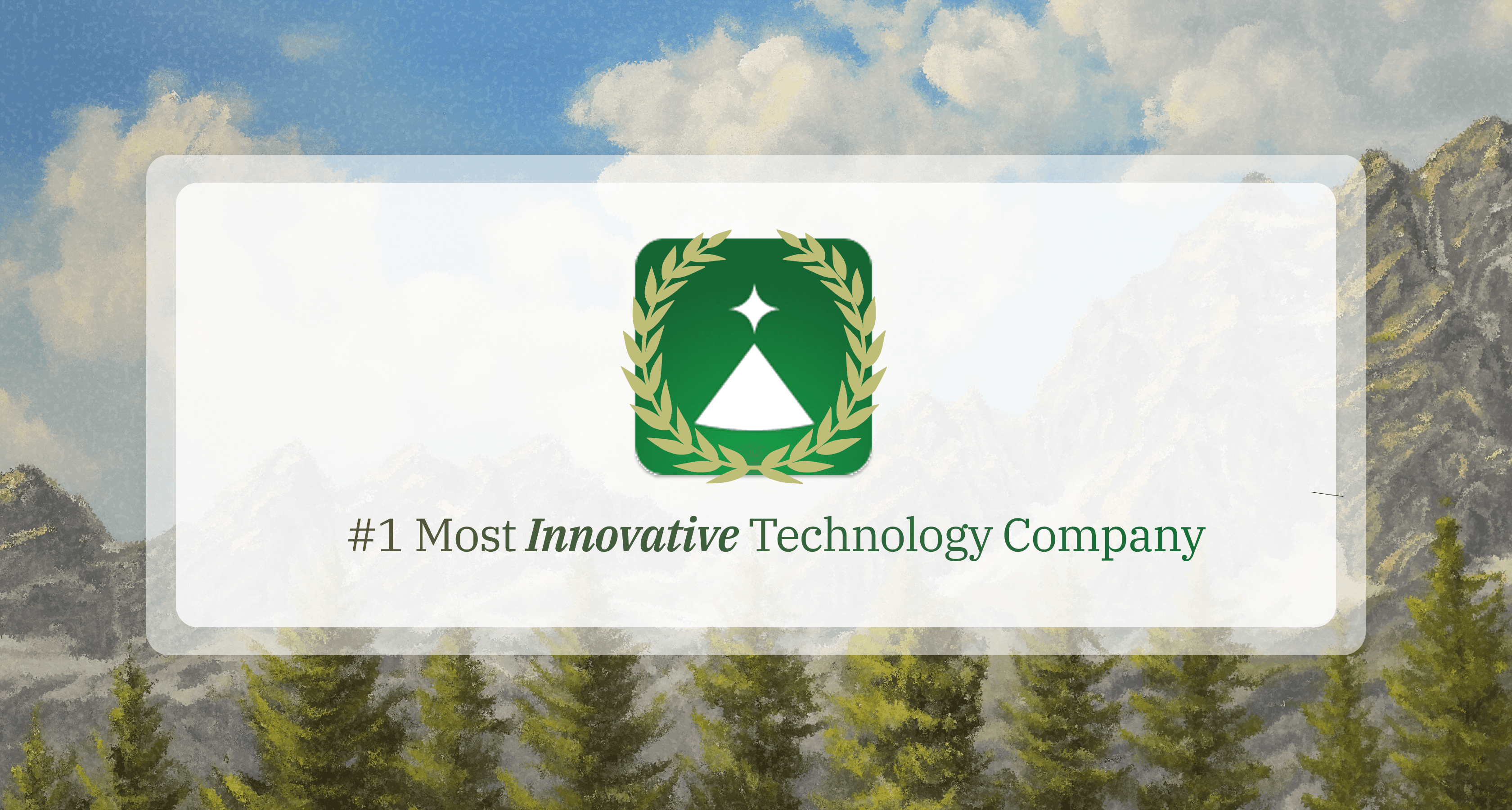
TL;DR: Wrodium won the Most Innovative Technology audience award at Berkeley SkyDeck's Pad-13 Pitch Competition (Batch 21). Wrodium is a Knowledge Freshness Infrastructure platform that transforms static enterprise content into living, governed knowledge nodes so that AI search engines, including ChatGPT, Perplexity, Google AI Overviews, Claude, and Gemini, retrieve the latest verified truth instead of stale pages. The judging panel included Julie Lein (Urban Innovation Fund, $200M+ AUM), David Riemer (Berkeley-Haas Executive in Residence, SkyDeck Advisor), and Irving Hsu (Mayfield Fund, $3B AUM). Berkeley SkyDeck has launched over 800 companies whose alumni have raised more than $2.7 billion.
Wrodium Named Most Innovative Technology at Berkeley SkyDeck
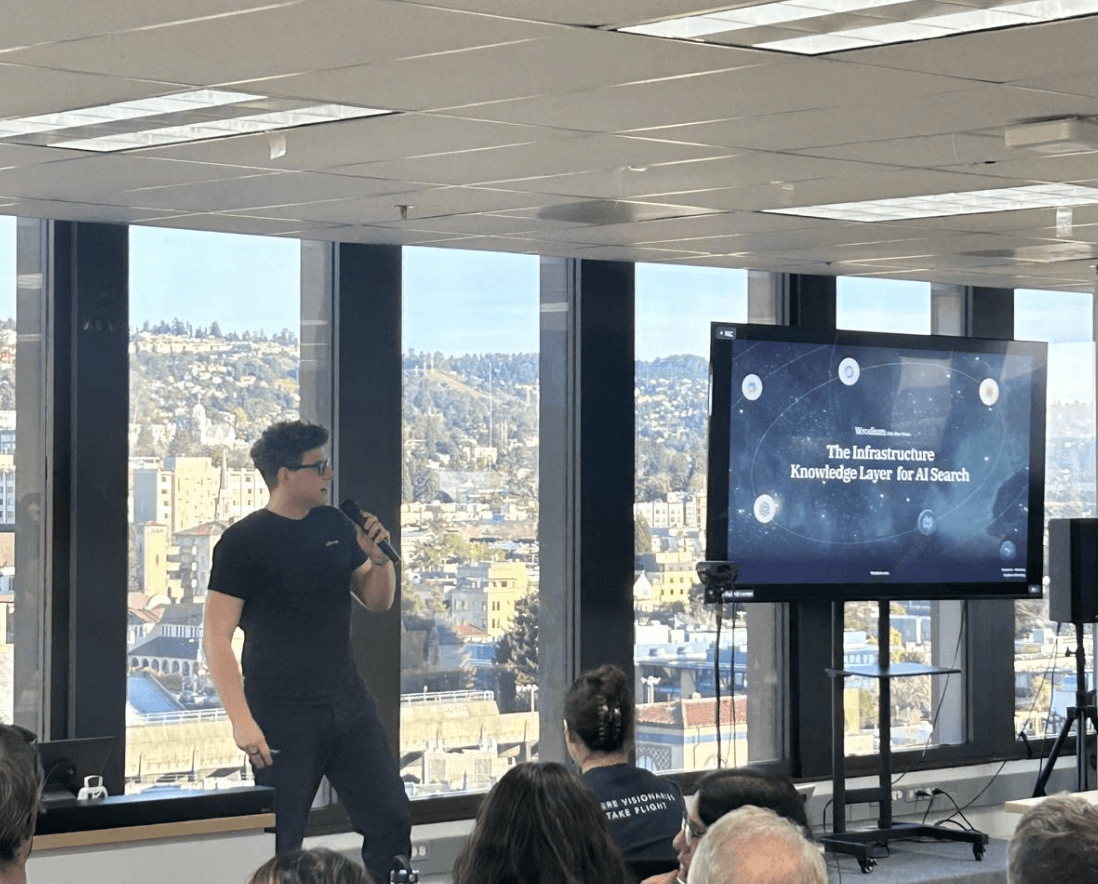
BERKELEY, CA, March 2026. Wrodium, the Berkeley SkyDeck-supported Knowledge Freshness Infrastructure platform, has been named the Most Innovative Technology company at Berkeley SkyDeck's Pad-13 Pitch Competition. This is the culminating event of the incubator's Batch 21 program. The audience award was voted on by a room of investors, founders, and advisors after 10 founders from a cohort of 53 teams presented their startups to a panel of three venture capital and industry judges.
Wrodium solves a problem most enterprises do not yet have language for: knowledge decay. Enterprise content contains two types of facts. Static facts, like founding dates and archived press releases, rarely change. But high-friction evolving facts, like pricing, regulatory disclosures, product capabilities, eligibility rules, and legal language, change constantly. Traditional CMS platforms treat both types identically. Over time, blogs contradict documentation. FAQs conflict with landing pages. Sales decks diverge from product reality. And AI models cite the outdated versions.
Wrodium's platform ensures that continuously evolving factual claims across enterprise content stay current, consistent, traceable, machine-readable, and AI-retrievable. The result: AI search engines like ChatGPT, Perplexity, Google AI Overviews, Bing Copilot, Claude, and Gemini retrieve the latest verified truth, not stale pages.
The company was co-founded by UC Berkeley students Leanid Palkhouski (CEO) and Arlen Kumar (CTO). Berkeley SkyDeck is UC Berkeley's official startup accelerator and incubator. SkyDeck has launched over 800 companies. Alumni of the program have collectively raised more than $2.7 billion in funding. Notable SkyDeck alumni include Lime, Hayden AI, MindsDB, Ambi Robotics, and Krisp. The SkyDeck Fund has $85 million under management across two funds, backed by Sequoia Capital, Mayfield, Sierra Ventures, and Canvas Ventures.
Who Judged the Berkeley SkyDeck Pad-13 Pitch Competition
The three judges who evaluated all ten pitches and selected the grand prize winner brought decades of combined experience in venture capital, marketing, and enterprise technology.
Julie Lein is Co-founder and Managing Partner of Urban Innovation Fund. Urban Innovation Fund is a venture capital firm with over $200 million in assets under management. Lein has invested in more than 60 seed-stage startups since 2016. She was named one of Living Cities' "25 Disruptive Leaders" in 2016. She holds degrees from Stanford University and MIT Sloan.
David Riemer is Founder of Box Out Industries. He has served as Executive in Residence at the UC Berkeley Haas School of Business since 2008. Riemer is a listed Berkeley SkyDeck Advisor and a regular judge at SkyDeck pitch competitions. He is the Amazon bestselling author of Get Your Startup Story Straight. Earlier in his career, he served as president of J. Walter Thompson San Francisco and as VP of Marketing at Yahoo. He has advised startups including Databricks and Anyscale on their founding narratives.
Irving Hsu is a Principal at Mayfield Fund. Mayfield is a venture capital firm founded in 1969 with $3 billion under management. Mayfield is one of the original backers of the Berkeley SkyDeck Fund. Hsu focuses on early-growth-stage investments in enterprise AI software and infrastructure. He previously held engineering and product roles at Meta, Slack, and Airbnb. He holds degrees in Computer Science and Business from Stanford University.
After the judges' evaluation, the live audience voted Wrodium as the startup with the most innovative technology in the cohort. The audience was composed of investors, founders, mentors, and members of the Berkeley startup ecosystem. The grand prize, selected by the judges, went to Immutaverse (CEO Dr. Jeanine J.). Bluerobins (founder Raji Kannan) won the audience award for Best Storytelling.
The Knowledge Decay Problem Wrodium Solves
Enterprises do not have a content problem. They have a knowledge decay problem.
Every enterprise publishes content across dozens of surfaces: blog posts, documentation, FAQ pages, landing pages, investor decks, regulatory filings, and help centers. When a pricing model changes, a compliance regulation updates, or a product capability launches, those changes need to propagate across every surface simultaneously. In practice, they never do.
The consequences compound over time. Blogs contradict official documentation. FAQ pages conflict with landing pages. Sales materials diverge from the actual product. When AI search engines crawl this fragmented content landscape, they have no way to distinguish the current truth from an outdated claim on a forgotten page. The result is AI hallucination risk, compliance exposure, brand erosion, and loss of AI citation share-of-voice.
This problem is accelerating because AI search engines are now the primary discovery layer for enterprise buyers. Gartner has predicted that traditional search engine volume will decline 25% by the end of 2026 due to AI chatbots and virtual agents. Between 58% and 65% of all searches now end without a click to any website. ChatGPT processes over one billion queries daily and has surpassed 800 million weekly active users, making it the fifth most visited website globally according to Semrush data from early 2026. Perplexity AI has grown to over 30 million monthly active users, processing approximately 780 million queries per month.
When Google displays an AI Overview on a search results page, organic click-through rates drop by roughly 61%. But brands cited in Google's AI Overviews earn 35% more organic clicks than those not cited, according to Seer Interactive research. AI search traffic converts at 14.2% compared to Google's 2.8% baseline. That is a roughly five-fold improvement in conversion rate.
The enterprises that govern their knowledge for AI retrieval now will own the next decade of discovery. The ones that do not will be cited incorrectly, or not cited at all.
What Wrodium Actually Does: From Static Pages to Living Articles
Wrodium transforms static enterprise content into Living Articles. Instead of publishing pages and forgetting them, Wrodium extracts factual claims, maps each claim to a verified source of truth, detects drift when facts change, flags contradictions across pages, updates structured data automatically, maintains version history with full auditability, and optimizes every article for AI retrieval compatibility.
Every article becomes an active knowledge node. Every claim becomes traceable. Every update becomes governed.
The platform includes several integrated components.
Claim Extraction and Source-of-Truth Mapping
Wrodium identifies every factual claim within a piece of content and maps it to the enterprise's canonical source of truth. When the source of truth changes, Wrodium detects the drift and flags every page where the outdated claim still lives.
Update Agents
Update Agents automatically monitor factual freshness on cycles of 60 days or less. They flag and rewrite claims that have gone stale. This is a critical capability because AI models deprioritize outdated information. Stale content does not just lose visibility. It actively causes AI hallucination when models retrieve and present expired facts as current.
Contradiction Detection
Wrodium continuously scans across all enterprise content surfaces to identify contradictions. When a pricing page says one thing and a blog post says another, Wrodium flags the conflict and traces which version aligns with the verified source of truth.
Guardrails
Guardrails convert content into extractable, citation-ready statements. They validate JSON-LD schema markup to ensure AI models can properly parse the content's entities and relationships. This is what makes content machine-readable and AI-retrievable.
Prompt Telemetry
Prompt Telemetry tracks which AI prompts cite the brand. It records the citation position, context, and linked sources for each mention across ChatGPT, Perplexity, Google AI Overviews, Claude, Gemini, Brave, and Bing Copilot.
GEO-16 Audit
The GEO-16 Audit scores any webpage against Wrodium's proprietary 16-pillar framework. It evaluates content across four dimensions: Authority, Evidence, Structure, and Freshness. Pages scoring 0.70 or higher on the composite GEO score with 12 or more pillar hits show substantially higher AI citation rates.
From the CEO: What Winning at Berkeley SkyDeck Means
"Six months ago, most enterprises had no language for the problem we solve,"
said Leanid Palkhouski, Co-founder and CEO of Wrodium.
"Today, brands are realizing that publishing is no longer enough. Content must self-evolve. Pricing changes, compliance updates, product launches. These facts change constantly, and when AI models retrieve the stale version, the consequences are real: hallucinated answers, compliance exposure, and lost visibility."
"Winning the Most Innovative Technology award at Berkeley SkyDeck, voted by a room full of investors and founders who evaluate technology for a living, validates the core thesis,"
Palkhouski continued. "Platforms publish. Wrodium governs truth. That is the infrastructure layer enterprises need in an AI-indexed world."
What Is Next for Wrodium in 2026
The Most Innovative Technology recognition at Berkeley SkyDeck marks the beginning of a broader push for Wrodium in 2026.
Enterprise knowledge governance. The next phase of Wrodium's product roadmap focuses on multi-surface contradiction detection and automated compliance propagation for regulated industries including financial services, healthcare, and insurance.
Expanding AI search engine coverage. The platform currently tracks and optimizes for ChatGPT, Perplexity, Google AI Overviews, Claude, Gemini, Brave, and Bing Copilot. Wrodium is building integrations for additional AI-powered discovery surfaces and internal enterprise copilots as they emerge.
Deepening the UC Berkeley research program. The next phase of GEO-16 research focuses on the relationship between content freshness and AI hallucination reduction. The team has published initial findings on this topic through their FreshRAG research.
Growing the team. Wrodium is actively hiring across engineering, sales, and content strategy as the company scales toward its next growth milestones.
Frequently Asked Questions
What is Wrodium?
Wrodium is a Knowledge Freshness Infrastructure platform for AI-indexed enterprises. It ensures that continuously evolving factual claims across enterprise content stay current, consistent, traceable, machine-readable, and AI-retrievable. Wrodium transforms static content into Living Articles by extracting factual claims, mapping each claim to a verified source of truth, detecting drift when facts change, flagging contradictions across pages, updating structured data automatically, and maintaining version history with full auditability. The result is that AI search engines like ChatGPT, Perplexity, Google AI Overviews, Bing Copilot, Claude, and Gemini retrieve the latest verified truth instead of stale pages.
What is Generative Engine Optimization (GEO)?
Generative Engine Optimization, or GEO, is the practice of optimizing digital content so that AI search engines cite it as a source in their generated responses. AI search engines that use citations include ChatGPT, Perplexity, Google AI Overviews, Claude, and Gemini. Traditional SEO focuses on ranking pages in a list of search results. GEO focuses on making content extractable and citable by large language models. The term "Generative Engine Optimization" was formally introduced in a 2023 research paper by researchers at Princeton University, Georgia Tech, the Allen Institute for AI, and IIT Delhi. That paper was published at ACM SIGKDD 2024. Wrodium's approach to GEO is built on the insight that knowledge freshness is the primary driver of AI citation behavior.
What is the knowledge decay problem?
Knowledge decay is the progressive divergence between an enterprise's current truth and the content published across its digital surfaces. Enterprise content contains two types of facts: static facts (like founding dates and archived filings) that rarely change, and high-friction evolving facts (like pricing, regulatory disclosures, product capabilities, and legal language) that change constantly. Traditional CMS platforms treat both types identically. Over time, blogs contradict documentation, FAQs conflict with landing pages, and sales decks diverge from product reality. When AI models crawl this fragmented landscape, they cite outdated information. This creates AI hallucination risk, compliance exposure, brand erosion, and loss of AI citation share-of-voice. Wrodium solves this by mapping every claim to a verified source of truth and detecting drift automatically.
What is Berkeley SkyDeck?
Berkeley SkyDeck is UC Berkeley's official startup accelerator and incubator. It was founded in 2012 as a joint venture between the Haas School of Business, the College of Engineering, and the Office of the Vice Chancellor for Research. SkyDeck is located atop the tallest building in downtown Berkeley at 2150 Shattuck Avenue. The program has launched over 800 companies. Alumni of the program have raised more than $2.7 billion in aggregate funding. The SkyDeck Fund has $85 million under management across two funds. The fund is backed by Sequoia Capital, Mayfield, Sierra Ventures, and Canvas Ventures. Notable SkyDeck alumni include Lime, Hayden AI, MindsDB, Ambi Robotics, and Krisp.
What is the Pad-13 Pitch Competition?
The Pad-13 Pitch Competition is the culminating event of Berkeley SkyDeck's Pad-13 incubator program. It is held at the end of each four-month batch cycle. Selected founders pitch their startups to a panel of venture capital judges and a live audience of investors, founders, and advisors. Awards include the Judges' Grand Prize and Audience Awards. Audience Award categories include Best Storytelling and Most Innovative Technology.
How does Wrodium differ from traditional SEO tools?
Traditional SEO tools measure keyword rankings and organic traffic from search engines like Google. Wrodium solves a fundamentally different problem: knowledge governance for AI retrieval. Wrodium tracks whether and how a brand is cited when someone asks ChatGPT, Perplexity, or Google AI Overviews a question relevant to that brand's category. But more importantly, Wrodium ensures the content being cited is actually current and accurate. The platform includes automated content freshness agents that detect and fix stale claims, contradiction detection across all enterprise content surfaces, a proprietary GEO-16 audit framework that scores content across 16 citation-predictive pillars, prompt telemetry that tracks which AI queries cite the brand, and citation-ready content generation with validated structured data.
What AI search engines does Wrodium optimize for?
Wrodium currently tracks and optimizes brand visibility across seven AI search engines and copilot platforms: ChatGPT, Perplexity AI, Google AI Overviews, Bing Copilot, Anthropic Claude, Google Gemini, and Brave Search. The platform is also building integrations for internal enterprise copilots. Wrodium is expanding coverage to additional AI-powered discovery surfaces as they emerge.
Who founded Wrodium?
Wrodium was co-founded by two UC Berkeley students. Leanid Palkhouski is the CEO. He studied Business Administration and Data Science at the UC Berkeley Haas School of Business. Arlen Kumar is the CTO. Kumar conducts AI citation behavior research under Professor Marti Hearst at UC Berkeley and developed the GEO-16 predictive framework. Kumar previously founded Air Quake Simulations, a VR flight simulator hardware company. Wrodium is backed by Berkeley SkyDeck.
How can enterprises start optimizing for AI search engines?
Enterprises can begin optimizing for AI search by taking five concrete steps. First, audit existing content for extractability. Each key claim should be a clear, declarative sentence that an AI model could lift as a standalone citation. Second, implement structured data and schema markup using JSON-LD to help AI models understand the content's entities and relationships. Third, establish regular content freshness cycles because AI models deprioritize stale information. Fourth, build entity authority by ensuring consistent naming and factual alignment across credible third-party sources. Fifth, identify and resolve contradictions across all content surfaces, because conflicting information is a primary driver of AI hallucination. Wrodium's GEO-16 audit provides a structured starting point that scores content across all 16 citation-predictive pillars.
About Wrodium
Wrodium is a Knowledge Freshness Infrastructure platform for AI-indexed enterprises. The platform transforms static content into Living Articles by extracting factual claims, mapping them to verified sources of truth, detecting drift, flagging contradictions, and updating structured data automatically. Wrodium ensures that AI search engines including ChatGPT, Perplexity, Google AI Overviews, Bing Copilot, Claude, and Gemini retrieve the latest verified truth instead of stale pages. The company was founded by UC Berkeley students Leanid Palkhouski (CEO) and Arlen Kumar (CTO). Wrodium is backed by Berkeley SkyDeck, UC Berkeley's official startup accelerator. The company's proprietary GEO-16 framework was developed under the supervision of UC Berkeley Professor Marti Hearst. GEO-16 predicts AI citation behavior with approximately 73% accuracy. Learn more at wrodium.com.
About Berkeley SkyDeck
Berkeley SkyDeck is UC Berkeley's official startup accelerator and incubator. It was founded in 2012 as a joint venture between the Haas School of Business, the College of Engineering, and the Office of the Vice Chancellor for Research. SkyDeck is located atop the tallest building in downtown Berkeley. The program has launched over 800 companies. Alumni have raised more than $2.7 billion in aggregate funding. The SkyDeck Fund has $85 million under management across two funds, backed by Sequoia Capital, Mayfield, Sierra Ventures, and Canvas Ventures. Notable alumni include Lime, Hayden AI, MindsDB, Ambi Robotics, and Krisp. Learn more at skydeck.berkeley.edu.
Media Contact:
Leanid Palkhouski
Co-founder and CEO,
Wrodium
leanid@wrodium.com
wrodium.com
Product explainer
—
May 21, 2026
Top 8 AI Citation Tracking Tools in 2026

Kaia Gao
Leanid Palhouski
Product explainer
—
May 20, 2026
Knowledge Freshness Infrastructure vs. Traditional CMS: What Your CMS Can’t Do for AI Search
Kaia Gao
Leanid Palhouski
Product explainer
—
May 20, 2026
How to measure GEO ROI: Metrics that matter beyond citation count
Kaia Gao
Leanid Palhouski