

Arlen Kumar
Leanid Palhouski
Case Studies
—
Jan 29, 2026
Case Study: Anqa Life
Client: Anqa Life
Industry: Crypto-indexed life insurance (Bitcoin & Ethereum IUL)
Engagement: 30 days
Results:
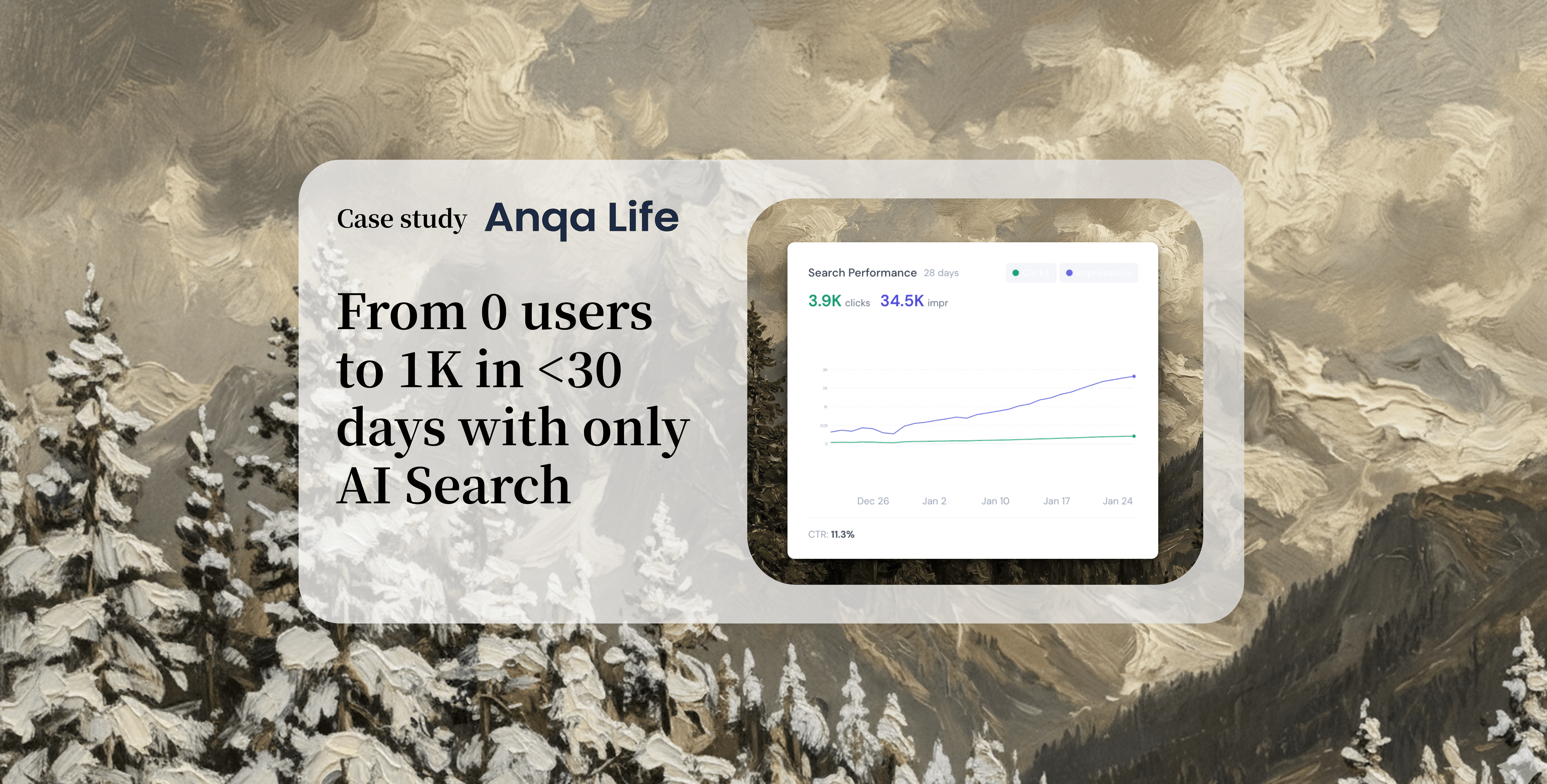
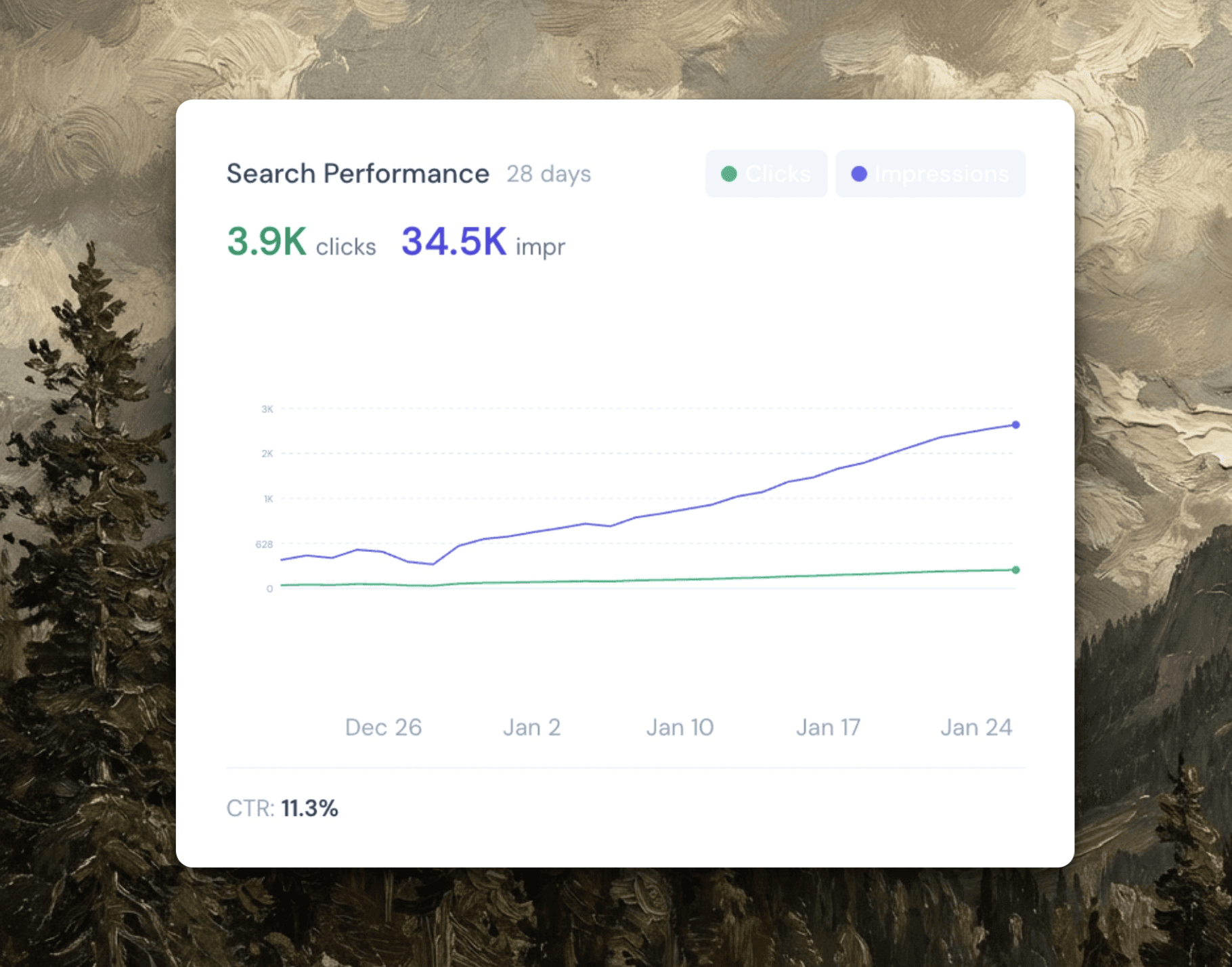
956 active users
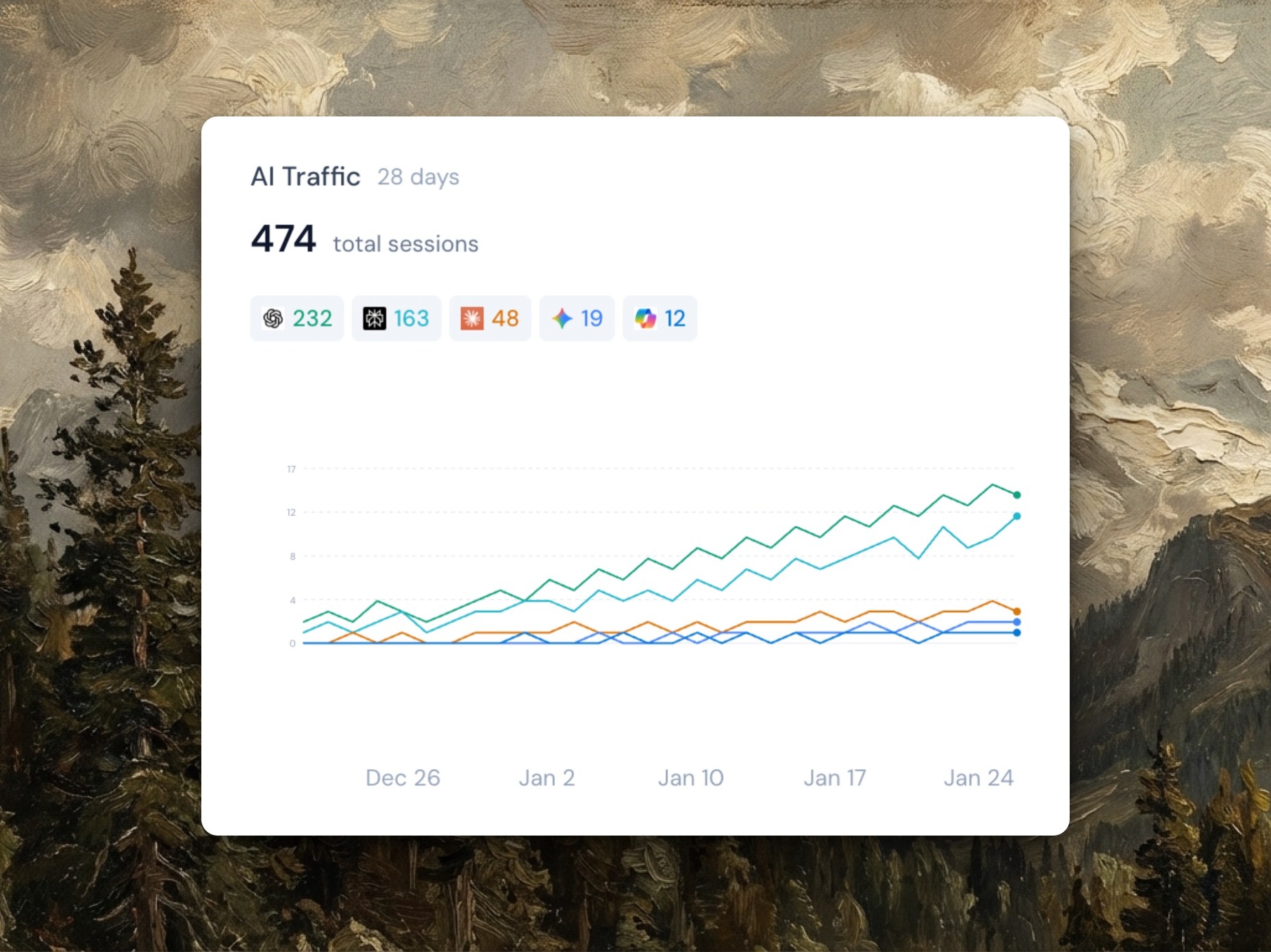
60 AI citations (ChatGPT + Perplexity + Claude + Gemini)
30+ qualified form submissions
+340% branded search lift
2m 23s average engagement time
17 leads purely from AI Search
Fundamental Problem:
AnqaLife had a differentiated product but no presence in AI search.
Specifically:
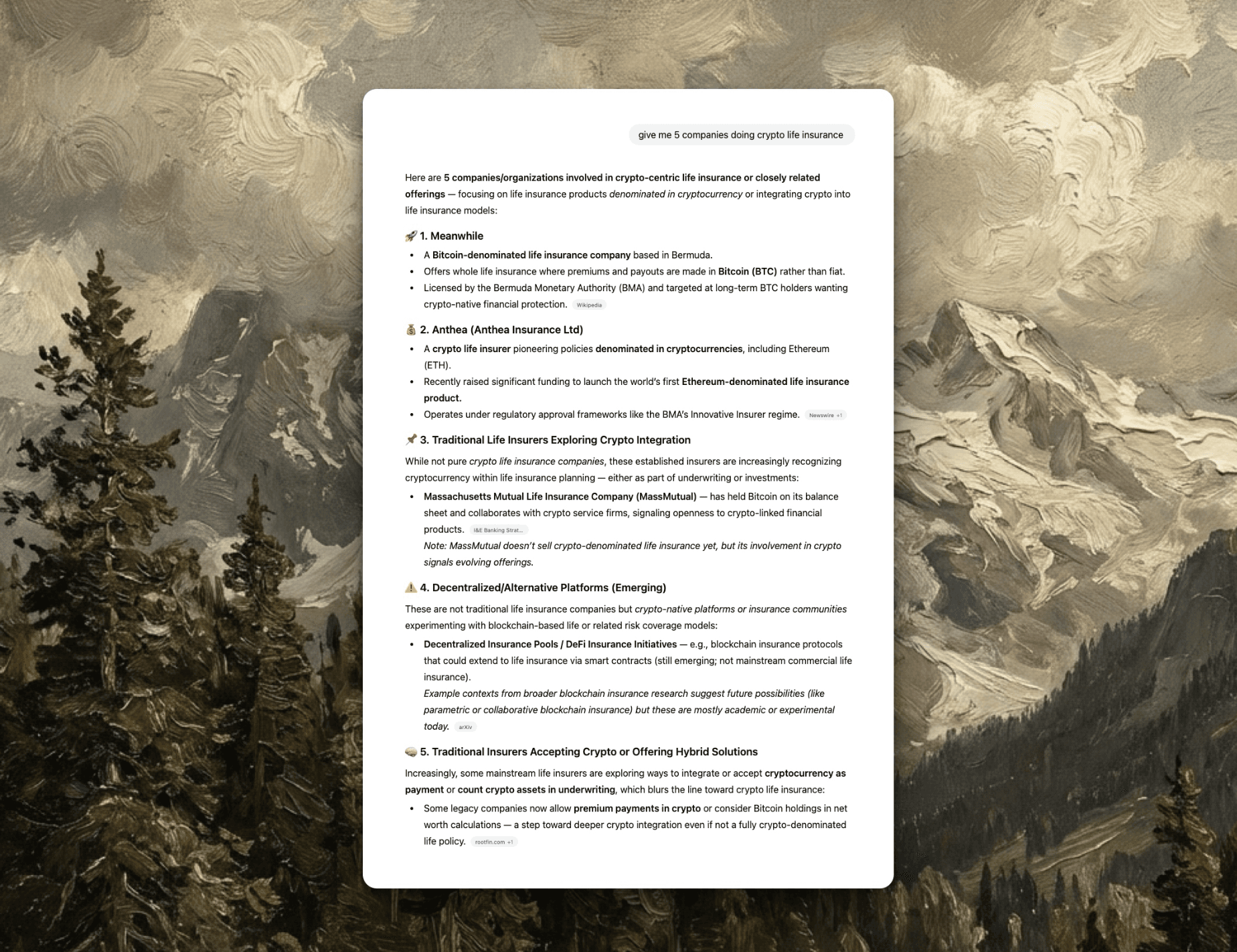
Not cited when users asked ChatGPT or Perplexity about crypto life insurance
No way to measure demand originating from AI systems
Content not structured for AI extraction or citation
Conversions occurring without clear attribution
Traditional SEO and GA4 could not explain growth or justify spend.
What Wrodium Implemented (Conversion Systems)
Wrodium deployed three AI-native systems designed to turn AI visibility into measurable pipeline.
1. GEO Content Architecture (Citation-Ready Pages)
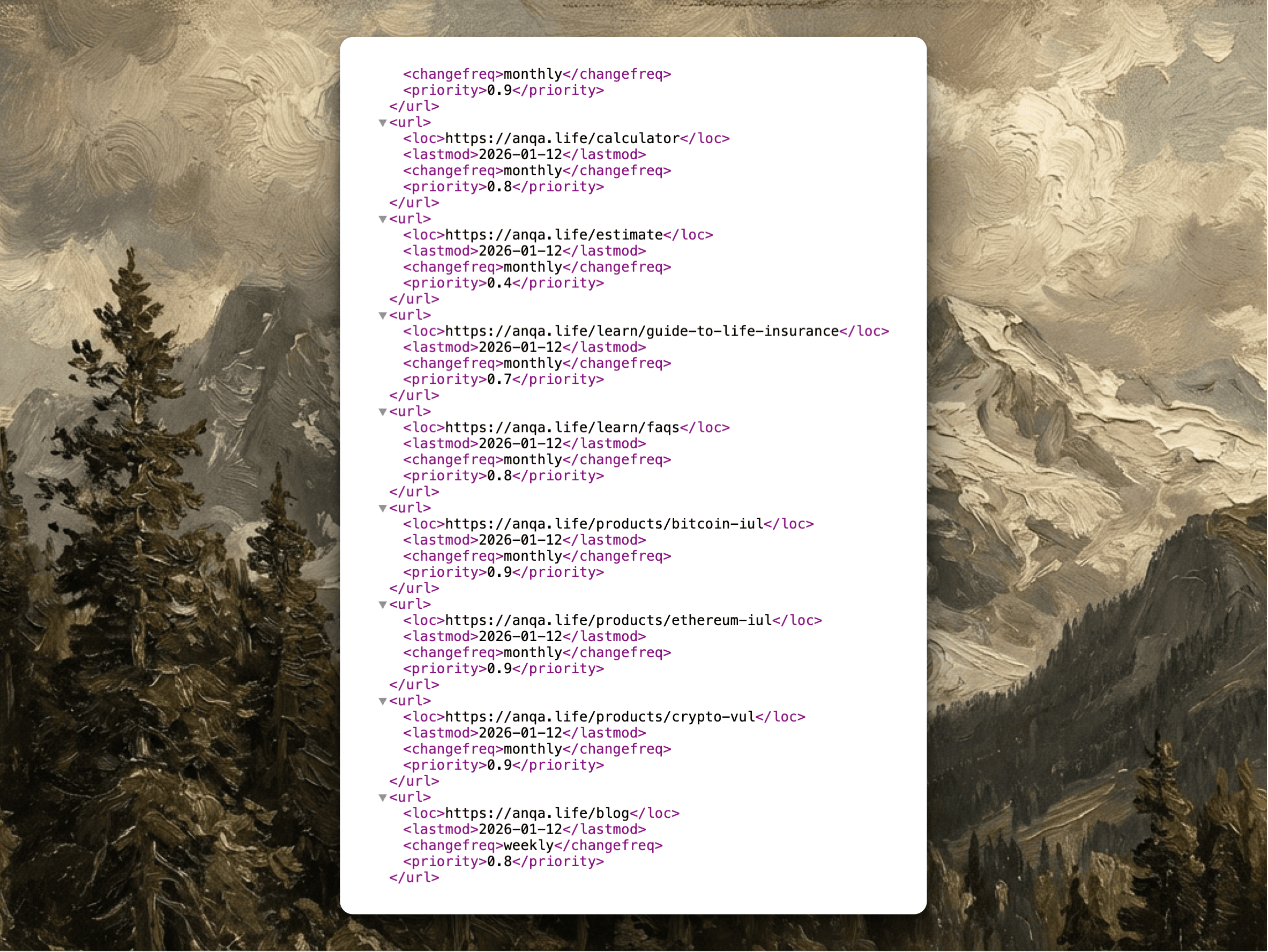
We restructured Anqa’s site around clear, extractable claims rather than keyword-driven content.
What we implemented
Pillar pages for:
Life Insurance Indexed to Digital Assets
Bitcoin IUL
Ethereum IUL
Each page followed a consistent AI-readable structure:
"What it is"
"How it works"
"Who it’s for"
"Why it’s credible"
Why this converts
AI systems prefer precise definitions and scoped claims. Users arriving from AI are already researching and leading to longer sessions + higher-intent behavior.
2. Visibility-to-Conversion Analytics (AI Attribution)
AI traffic rarely passes clean referrer data. We built attribution without relying on referrers.
What we implemented
Continuous monitoring of citations across ChatGPT, Perplexity, Gemini and Claude
Behavioral fingerprinting of AI-referred sessions:
Deep scroll depth
Copy events
FAQ interaction
Extended session duration
Correlation between citation spikes and branded search growth
Session scoring to identify “likely AI-referred” users
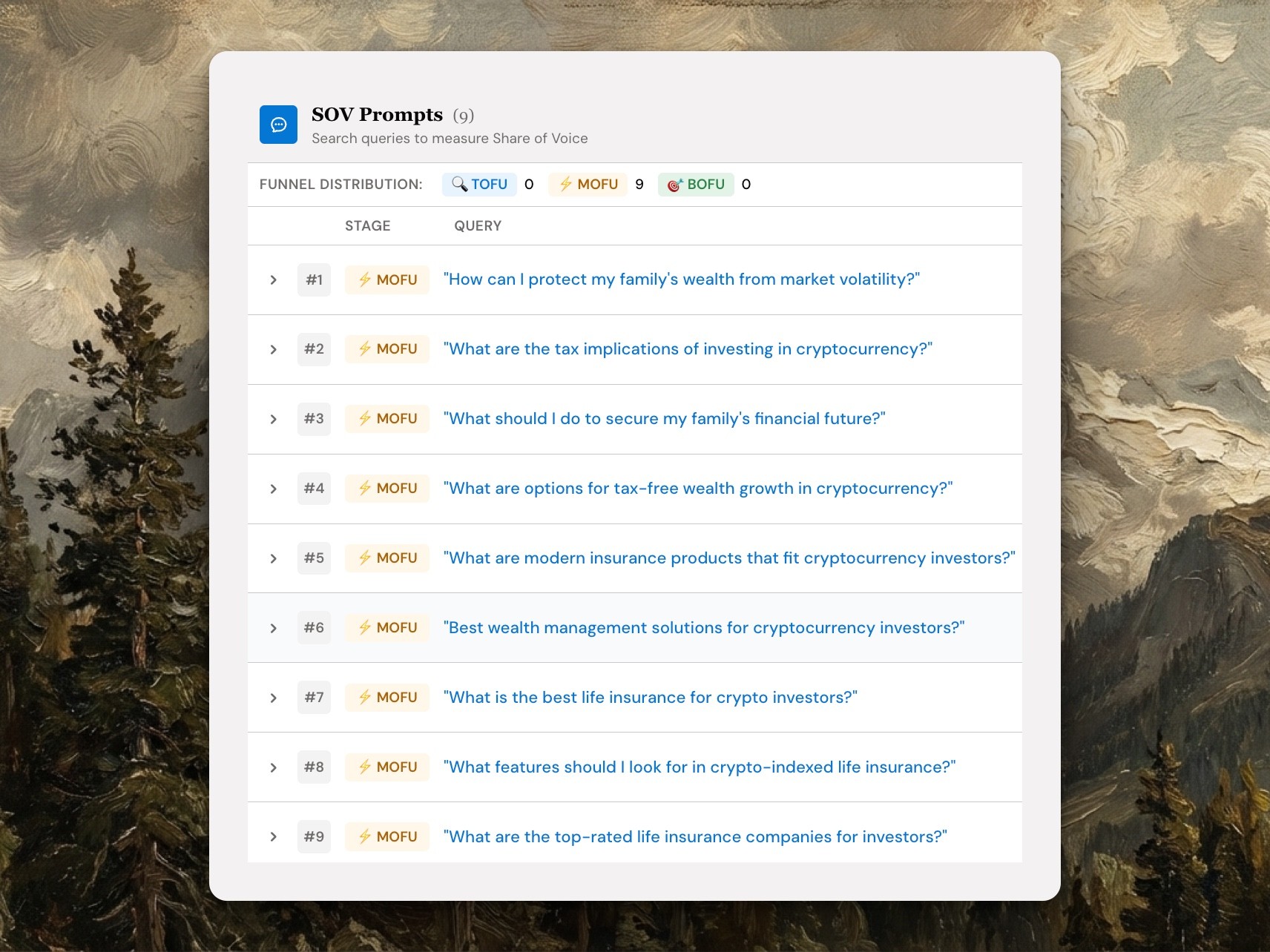
Outcome in <30 days:
420–700 estimated AI-driven sessions
16 AI-attributed leads
42% lower cost per lead vs paid search
3. Clean Referral & Source Attribution (?ref= Tracking)
Most AI-driven sessions show up as “direct.” We fixed attribution at the source.
What we implemented:
?ref=parameters on all AI-originating linksDirect mapping of ref parameters into GA4 source/medium
Separation of AI traffic from organic, paid, and direct
Result:
433 sessions accurately attributed
17% of traffic reclassified from “direct/unknown”
Clear conversion rates by AI source (ChatGPT vs Perplexity)
Wrodium's Claim Monitoring and Optimization Engine
Beyond analytics, Wrodium continuously monitors and optimizes the claims on your pages to maximize citation likelihood.
The problem with static content
AI systems evaluate content differently than humans. A claim that reads well might not get cited because:
It's too vague for AI to extract
It contradicts other pages on your site
Competitors have clearer, more specific claims
The supporting evidence isn't structured properly
You need continuous monitoring to know what's working and what's not.
How Wrodium's claim optimization works
MONITOR: Automated claim extraction
Wrodium scans every page and extracts the key claims: what you're asserting, what evidence supports it, and how it's structured.
ANALYZE: Citation correlation
We track which claims get cited by AI systems and which don't. Over time, patterns emerge: certain claim structures, evidence types, and positioning consistently outperform.
OPTIMIZE: Recommendations pushed to CMS
When we identify underperforming claims or opportunities, recommendations appear directly in the Wrodium CMS. Your team can accept, modify, or reject with one click.
VERIFY: Post-change citation tracking
After changes go live, we monitor citation frequency to verify the optimization worked. If not, we iterate.
What this looked like for Anqa Life:
Claims monitored: 47
Claims optimized: 23
Citation rate improvement: +180% on optimized claims
Time to optimization: <24 hours from detection
Example optimization:
BEFORE: "We offer tax-efficient crypto insurance products."
AFTER: "Anqa Life provides Indexed Universal Life (IUL) insurance policies linked to Bitcoin and Ethereum performance, enabling tax-deferred growth and tax-free policy loans under current IRS guidelines. Rated 4.8/5 on Trustpilot."
The second version is more specific, includes the product type (IUL), names the assets (Bitcoin, Ethereum), cites the regulatory framework (IRS guidelines), and includes social proof (Trustpilot rating). AI systems strongly prefer this level of specificity and third-party validation.
-> Why content freshness matters for AI: wrodium.com/blogs/wrodium-on-content-freshness-what-ai-search-engines-actually-reward
30-Day Results
Traffic:
- 956 active users
- 10,000 page views
Engagement:
- 2m 23s average engagement time
- 2,336 copy events
- 360 FAQ interactions
Conversions:
- 14–38 form submissions
- 10–17 attributed to AI search visibility
AI Visibility
- 60 total citations
- ChatGPT: 35
- Perplexity: 25
- +340% branded search lift
Key Takeaways for Enterprises
AI visibility must be measured differently
Traditional analytics miss generative demand entirely.Branded search is the strongest AI proxy metric
AI citations create downstream demand, not just clicks.Claim clarity beats content volume
Specific, well-structured claims are what AI systems cite.Attribution unlocks budget decisions
Once AI conversions are measurable, GEO becomes defensible.GEO compounds faster than traditional SEO
Anqa went from zero visibility to measurable pipeline in 30 days, not quarters.
SUMMARY
Anqa Life had a strong product but zero organic visibility. Traditional analytics couldn't measure AI search performance, and there was no way to track conversions from ChatGPT or Perplexity.
Wrodium deployed our GEO infrastructure: content optimization, the Wrodium CMS, visibility-to-conversion analytics with full referral tracking, and a review platform strategy using Trustpilot and G2 to build AI-credible social proof.
30 days later: 956 active users, 10K page views, 60 AI citations, and 14-38 qualified form submissions with full attribution across traditional and AI search channels.
-> Learn how GEO works: wrodium.com/blogs/geo-16-framework
-> More insights: wrodium.com/insights
PLATFORM INTEGRATIONS
Wrodium integrates with your existing CMS:
Webflow: wrodium.com/docs/webflow-integration
WordPress: wrodium.com/docs/wordpress-integration
Contentful: wrodium.com/docs/contentful-integration
Custom API: wrodium.com/docs/cms-api-reference
WHAT WE OFFER
GEO Strategy & Implementation
Pillar architecture, claim optimization, citation-ready content
-> wrodium.com/product-explainer
Wrodium CMS & Integrations
IndexNow, research agents, claim monitoring, ?ref= tracking built in
-> wrodium.com/docs/cms-integration
AI Search Analytics & Attribution
Visibility-to-conversion tracking with full referral attribution
Review Platform Strategy
Trustpilot + G2 optimization for AI credibility
Technical Documentation
Full API reference and integration guides
BOOK A STRATEGY CALL
See how Wrodium can build your AI search presence, implement ?ref= tracking, and prove ROI with visibility-to-conversion analytics.
RELATED RESOURCES
-> The GEO-16 Framework: What Makes AI Systems Cite Your Content
wrodium.com/blogs/geo-16-framework
-> GEO vs SEO vs AEO: Where Wrodium Fits In
wrodium.com/blogs/what-s-the-difference-between-geo-seo-and-aeo-and-where-wrodium-fits-in
-> Mastering AI Search Conversion: Turning ChatGPT Visibility into Revenue
wrodium.com/blogs/mastering-ai-search-conversion-turning-chatgpt-visibility-into-real-revenue
-> Content Freshness: What AI Search Engines Actually Reward
wrodium.com/blogs/wrodium-on-content-freshness-what-ai-search-engines-actually-reward
-> How Wrodium Improves Your AI Search Visibility
wrodium.com/blogs/how-wrodium-improves-your-ai-search-visibility
-> Unlock the Power of AI for Content Maintenance
wrodium.com/blogs/unlock-the-power-of-ai-for-content-maintenance
-> ChatGPT Shopping Research: How AI is Changing Purchase Behavior
wrodium.com/blogs/chatgpt-shopping-research
-> Weekly AI Search Signals for GEO, AEO, and AI-Native CMS
wrodium.com/blogs/weekly-ai-search-signals-for-geo-aeo-and-ai-native-cms
STAY UPDATED
Subscribe to Wrodium's newsletter for weekly AI search insights:
Browse all content:
Product explainer
—
May 21, 2026
Top 8 AI Citation Tracking Tools in 2026

Kaia Gao
Leanid Palhouski
Product explainer
—
May 20, 2026
Knowledge Freshness Infrastructure vs. Traditional CMS: What Your CMS Can’t Do for AI Search
Kaia Gao
Leanid Palhouski
Product explainer
—
May 20, 2026
How to measure GEO ROI: Metrics that matter beyond citation count
Kaia Gao
Leanid Palhouski